Business Name: BeeHive Homes of Alamogordo
Address: 1106 San Cristo St, Alamogordo, NM 88310
Phone: (575) 215-3900
BeeHive Homes of Alamogordo
Beehive Homes assisted living care is ideal for those who value their independence but require help with some of the activities of daily living. Residents enjoy 24-hour support, private bedrooms with baths, medication monitoring, home-cooked meals, housekeeping and laundry services, social activities and outings, and daily physical and mental exercise opportunities. Beehive Homes memory care services accommodates the growing number of seniors affected by memory loss and dementia. Beehive Homes offers respite (short-term) care for your loved one should the need arise. Whether help is needed after a surgery or illness, for vacation coverage, or just a break from the routine, respite care provides you peace of mind for any length of stay.
1106 San Cristo St, Alamogordo, NM 88310
Business Hours
Monday thru Sunday: 9:00am to 5:00pm
Instagram: https://www.instagram.com/beehivealamogordo/
YouTube: https://www.youtube.com/@WelcomeHomeBeeHiveHomes
Facebook: https://www.facebook.com/BeeHiveHomesAlamogordo
Cognition does not disappear simultaneously. Capabilities shift, compensate, and often surprise you. I have actually viewed a retired mechanic, quiet most days, come alive when handed a little engine to play with. I have actually seen a former choir member who might not recall breakfast harmonize to a hymn from 1958. Well selected activities do more than pass time. They can work out attention, stimulate language, welcome problem solving, and provide a person living with dementia a way to succeed.
This guide distills what tends to work, why it works, and how to adapt it in real homes and in a memory care home or assisted living setting. The objective is not to inspect boxes, but to provide a toolkit that appreciates the individual you love and the brain they have actually today.
What "boosting cognition" actually suggests in dementia care
Cognition is an umbrella. Under it sit attention, memory, language, visuospatial abilities, processing speed, and executive function. Dementia impacts each of these in different methods and at various tempos. A well developed activity targets a couple of domains at a time, keeps challenge simply above convenience, and lowers aggravation by shaping tasks to the person's strengths.
You do not require intricate products. You do need function. When activities feel pertinent to an individual's life story, engagement rises and behavior issues typically fall. Ten minutes of concentrated engagement that the individual takes pleasure in will do more for state of mind and function than an hour of generic "busywork."
Start with the person, not the diagnosis
Labels seldom guide day to day care. The individual's history does. Map three things: past roles, sensory preferences, and current abilities. A former nurse may enjoy arranging medical products by size and type. A lifelong garden enthusiast may focus better with soil under their nails and a window open for fresh air. Somebody who constantly worked nights might appear drowsy at 9 a.m. And peak in the late afternoon.

One household I worked with built a weekly "life story loop" for their father, a retired bus chauffeur. Early mornings began with a brief "path" in the area, he called out landmarks and practiced gentle turns with a rollator. Back home, we utilized a laminated city map and magnets to prepare the same path, then he logged "miles" in a note pad. That routine supported memory, attention, language, and pride, and his agitation around midday dropped within 2 weeks.
The physiology underneath engagement
When a person enjoys an activity, tension hormonal agents decline and dopamine nudges the brain to discover. Balanced motion and music can integrate neural shooting, which aids with timing and gait. Hand work, such as kneading dough or threading large beads, brings bilateral stimulation that supports coordination and attention. Short, duplicated bursts with clear starts and surfaces simulate how the brain discovers after injury or change.
This is why timing and pacing matter. Brains with dementia fatigue faster, then rebound. Go for brief, structured sessions, frequently 8 to 20 minutes depending upon the phase, with a tidy success at the end.
Designing an activity that fits today's brain
Anchor every activity with 3 components: predictability, choice, and feedback. Predictability comes from a consistent setup or script. Option can be as small as "red or blue?" Feedback suggests the individual can see or feel they did something right. That may be a puzzle piece snapping into location, a beat matched on a drum, or bread increasing in the oven.
Consider lighting, noise, and seating before material. Glare on a glossy table can make cards hard to see. A tough chair without armrests saps attention because the person works to balance. In numerous memory care settings, we lower background music, usage task lighting, and angle chairs 45 degrees to the table to cut visual clutter and cue engagement.
Here is a fast setup list families inform me keeps them on track.
- One job per surface, with tools currently laid out and all set to use Lighting brilliant enough to check out a paper without squinting Seating that supports hips and feet flat, with armrests for stability An easy visual model of the ended up job, positioned in the upper left for right-handed individuals, upper right for left-handed A clear cue for "all done," such as a tray or box where finished items go
Activities that train attention without feeling like drills
Attention is the entrance to every other cognitive skill. Numerous so-called memory issues are in fact attention issues. The method is to keep the person oriented to a simple goal while lessening extraneous demands.
Domino runs, pegboards, and sorting jobs work well when you match difficulty to capability. I typically begin with arranging tasks anchored in reality: combining socks from a mixed laundry basket, organizing hardware by size, or arranging welcoming cards by season. Introduce a visual rule, such as "all winter season cards on the snowflake mat," and you now have a continual attention task with a clear frame.
For vibrant attention, try a sluggish rhythm game. Utilize a hand drum or your knees. Tap a basic pattern, pause, and welcome the individual to copy. If they struggle, shorten the pattern and keep a stable tempo. Over a week, add one beat at a time. Beyond attention, rhythm trains timing and can rollover to steadier walking.
Language grows in familiar soil
People with dementia might lose nouns early while retaining emotional tone, cadence, and song lyrics. Activities that let language hitchhike on rhythm, images, and action tend to succeed.
Picture-based storytelling with household photos bridges spaces. Lay out 3 pictures from the exact same period, ask the individual to choose one, and invite brief information. Open concerns like "What is happening here?" can be too broad. Attempt "Whose apron is that?" or "Was this before or after the relocation?" If words stall, change to either-or prompts and reflect back what you hear, even if it is partial or confused. The point is not factual precision, it is language flow and connection.
Singing is language rehab camouflaged as pleasure. Brief call and reaction songs or choruses, embeded in a constant secret and pace, are best. Hymns, folk tunes, and popular hits from early the adult years generally land. In a memory care home, I keep a laminated songbook with 20 well liked choruses in large print. We cue words with an image rather than a lyric sheet when reading is hard, for instance a "You Are My Sunlight" sun drawing.
Gentle obstacles for memory
Strict memorization frequently annoys. Instead, work with recognition and procedural memory, which hold up longer. Menu planning with photo cards taps recognition, sequence, and choice. Set out five meal images, ask the individual to pick 3 for the week, then place them on a calendar. Revisit the same set two days later on and see what they recall with cues. Framed in this manner, "memory work" supports reality and feels collaborative.
Spaced retrieval, an approach where you practice a single truth over increasing periods, can be effective. It aids with safety and routines instead of trivia. For instance, "When you require the bathroom, what do you do?" Response: "Press the blue call button." Practice after 30 seconds, then 1 minute, 2 minutes, 4 minutes, as much as what the person can deal with that day. Keep tone light and commemorate every success. I limit spaced retrieval to 10 minutes, 2 or 3 times weekly, and track periods on a simple card.
Executive function through doing, not lectures
Planning, sequencing, and issue resolving show up in kitchen areas, workshops, and gardens. Cake mix with images of each step lets an individual plan and carry out with hints. We lay out bowls delegated right, location photo cards above, and physically remove each card as we finish it. Sequencing a 3 step plant care regular works likewise. Water, wipe leaves, turn the pot toward the light. Highlight what matters: "The leaves look shiny, that suggests you completed an action."

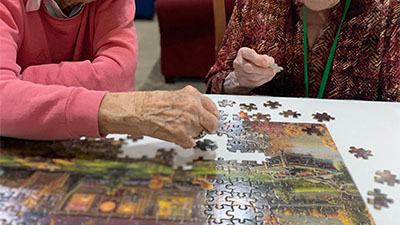
Puzzles can be executive function training, however choose ones that mirror real items. Wood inset puzzles or 12 to 24 piece jigsaws with strong contrast work better than abstract designs. If frustration increases, attempt frame puzzles where the outline guides positioning. Place just the required pieces on the table to minimize choice load.
Visuospatial skills and hand-eye coordination
Large print word searches and color by contrast sheets can be practical when designed for grownups, not kids. I prefer hands on tasks: moving beans in between containers with a scoop, stacking blocks by size, or matching covers to containers by fit. For people with Lewy body dementia, depth understanding might be unreliable. Usage high contrast surface areas, for instance a dark placemat under a light puzzle.
Balloon volley ball can be a pleasure, but guard security. Usage chairs with arms, clear the location, and play to a count rather than "points." Counting aloud supplies rhythm and provides a secondary focus that can enhance coordination.
The power of sensory work
Senses lead, cognition follows. Heat, fragrance, and texture pull people into the minute without requiring recall. Baking is a near perfect multi-sensory activity. Pre procedure components so the individual can put, stir, and knead safely. The scent that fills the home rewards attention and offers a natural "all done" hint. For those who do not cook, an easy bread dough to knead and shape into rolls works well, even if you bake it later.
If smells from the past are strong anchors, build a "memory box" with products connected to a life theme: a tiny bottle of motor oil for the mechanic, a sample of lilac for the garden enthusiast, a scrap of canvas for the sailor. Turn products slowly, one at a time, and set each with a tactile action, such as rubbing oil into a little piece of leather.
Movement as a cognitive tool
Movement boosts blood flow to the brain and can arrange attention. The trick is grading intensity. Seated Tai Chi or slow boxing patterns with a therapist can improve balance and attention in just 8 weeks based on small program audits in memory care neighborhoods. For home, try a 10 minute circuit: sit to stand from a tough chair, heel raises holding a countertop, mild marching in place, then a walk to the mailbox and back. While moving, layer a cognitive task, such as calling animals for each letter of the alphabet, but stop the naming if gait looks unsafe. Dual tasking ought to challenge, not destabilize.
Outside, nature does half the work. A 15 minute garden walk with purposeful stops, for instance "discover five yellow flowers," focuses attention and language. In assisted living, I often set a loop that goes by a bird feeder, a wind chime, and a raised bed. Each stop invites a brief action or comment to keep engagement fresh.
Social connection is not extra, it is the engine
People think of cognition as an individual characteristic, yet it flourishes in company. A two person activity where functions are asymmetric, assistant and coach, lowers pressure. Someone stirs batter, the other reads the picture card steps. Someone places picture magnets on a board, the other names the place. In a memory care home, pairing homeowners with complementary strengths raises both. A previous teacher who speaks clearly however fumbles with her hands can lead a reading circle using brief poems, while a peaceful gentleman who sees patterns rapidly can organize the next set of cards.
Families typically ask about group size. For moderate dementia, I aim for two to four people. Bigger groups can work for music and movement, but attention to task and safety drop as numbers rise.
Adapting to phase without losing dignity
Early phase: emphasize novel however meaningful obstacles. Travel preparation with a streamlined map, budgeting an imaginary picnic with mock costs, or learning a new card game with visual help. Keep errors safe and natural.
Middle phase: shorten actions, increase cues, and lean into rhythm and sensory elements. Repeat favorite activities weekly with small variations, such as changing the cake taste or the garden plant.
Late phase: focus on comfort, sensory enjoyment, and micro-successes. Hand under hand assistance lets an individual feel the motion without requiring it. Match breath to actions, like breathing in on the arm lift, exhaling on journalism, to soothe. Ten seconds of shared humming can be an "activity" when energy is low.
In every stage, keep adult looks. Avoid childish images, even on adaptive products. Change animation animals with nature photos or vibrant patterns.
Safety and danger, handled with intention
Risk can not be zero, nor should it be. Individuals have the right to significant threat, whether that is pruning a rosebush or whisking eggs at the stove. Families can manage risk by changing tools and environment. Usage plastic knives that still cut soft foods, induction cooktops that decrease burn threat, and non slip mats under any work surface. In a monitored memory care setting, ask staff how they stabilize engagement and security, and collaborate on risk prepare for activities your loved one values.
A few red flags suggest you must stop briefly or change gears.
- Sudden change in attention or coordination that looks different from baseline Grimacing, safeguarded motion, or breath holding that recommends pain Escalating frustration with clenched jaw or repeating "I can't" Glazed look, head dozing, or repeated yawning that signals fatigue Fixating on an error, such as remodeling an action over and over, without progress
When you see one, stop, validate the sensation, and alter the context. Offer water, a stretch, or a sensory reset like a warm washcloth on the hands. Return later on with a smaller piece of the very same task.
Working with a memory care home or assisted living community
If your loved one lives in a memory care home, ask for the activity calendar, but look much deeper. The very best neighborhoods use calendars as scaffolds, then embellish throughout the day. Ask how personnel adjust activities by interest and phase, and how they record what engages your member of the family. Bring 3 to five specific ideas from their life story. A dish card in their handwriting, a small tool from their trade, or a playlist of favorite tunes can alter how they participate.
Consistency across staff matters. Share brief scripts that work. For example, "Mr. Lee likes to begin with 2 practice taps before the rhythm game," or "Deal Mary the blue apron, she will refuse the red one." Excellent groups appreciate details like these, and they take a trip throughout shifts.
In assisted dealing with a combined population, quieter, smaller sized group activities throughout peak noise hours can prevent overwhelm. Request a weekly slot in a smaller space for customized work, even if the main calendar reveals a big group event.
Measuring effect without making it a test
You do not require official ratings to understand if something assists. Expect a handful of markers over two to 4 weeks: how quickly the individual engages, how often they smile or speak throughout the task, whether agitation later in the day reduces, and if sleep looks steadier. In a number of communities where I have actually sought advice from, including 2 15 minute customized sessions each weekday cut afternoon agitation episodes by approximately a third over 6 weeks. That type of modification appears in families' stories long before it hits a spreadsheet.
Keep a basic log in a notebook or phone. senior living Date, activity, what worked, what did not, any state of mind modifications that day. This makes it easier to fine-tune and to promote for what your loved one needs in a memory care setting.
A week that balances brain and heart
Here is how a family may form a week for a female in moderate dementia who liked baking, gardening, and church music. Monday morning, sift flour and step sugar for tomorrow's muffins, with a hymn playlist on low in the background. Short walk to inspect the tomatoes, calling what is ripe by color instead of waiting for ideal labels. Tuesday, complete the muffins, set the table with a favorite cloth, invite a next-door neighbor for coffee and 2 tunes. Wednesday, a photo chat utilizing three garden pictures and a watering regimen for houseplants. Thursday, balloon beach ball for ten minutes, then quiet time with a lavender hand massage. Friday, a rhythm game with a hand drum, adding a beat if she smiles, then a drive to a regional nursery to smell herbs.
The typical thread is pacing and purpose. Each day holds a couple of focused efforts, then rest. Familiar anchors bookend the novel parts.
When absolutely nothing seems to work
There are days when engagement is flat. Before altering activities, scan for reversible problems. Dehydration blunts attention. A urinary system infection can hinder cognition without a fever. Badly fitting listening devices or glasses matter more than any game. Medication modifications, especially brand-new anticholinergics or sedatives, can sap initiative. If an once enjoyed activity loses all pull for a week or more, loop in the medical care clinician.
Sometimes the answer is not more stimulation, however less. Individuals with dementia can drown in sound and visual mess. I have cleared a table, provided a warm cup to hold, and simply sat. Five minutes later on, the individual started to hum. We built from that.
Final ideas for families
Effective dementia care lives in the normal. Fold towels, name the birds, tap a beat, odor cinnamon. Construct routines that offer confidence, and leave space for surprise. You will discover to spot that somewhat brighter appearance in their eyes when an activity hits the best note. Conserve those minutes and duplicate them, gently and often.
If you deal with a memory care home or assisted living team, bring your competence as family, because you are the keeper of the life story. When experts and households pool knowledge and take notice of the individual in front of them, cognition discovers places to breathe, and daily life feels more like living than managing.
BeeHive Homes of Alamogordo provides assisted living care
BeeHive Homes of Alamogordo provides memory care services
BeeHive Homes of Alamogordo provides respite care services
BeeHive Homes of Alamogordo supports assistance with bathing and grooming
BeeHive Homes of Alamogordo offers private bedrooms with private bathrooms
BeeHive Homes of Alamogordo provides medication monitoring and documentation
BeeHive Homes of Alamogordo serves dietitian-approved meals
BeeHive Homes of Alamogordo provides housekeeping services
BeeHive Homes of Alamogordo provides laundry services
BeeHive Homes of Alamogordo offers community dining and social engagement activities
BeeHive Homes of Alamogordo features life enrichment activities
BeeHive Homes of Alamogordo supports personal care assistance during meals and daily routines
BeeHive Homes of Alamogordo promotes frequent physical and mental exercise opportunities
BeeHive Homes of Alamogordo provides a home-like residential environment
BeeHive Homes of Alamogordo creates customized care plans as residents’ needs change
BeeHive Homes of Alamogordo assesses individual resident care needs
BeeHive Homes of Alamogordo accepts private pay and long-term care insurance
BeeHive Homes of Alamogordo assists qualified veterans with Aid and Attendance benefits
BeeHive Homes of Alamogordo encourages meaningful resident-to-staff relationships
BeeHive Homes of Alamogordo delivers compassionate, attentive senior care focused on dignity and comfort
BeeHive Homes of Alamogordo has a phone number of (575) 215-3900
BeeHive Homes of Alamogordo has an address of 1106 San Cristo St, Alamogordo, NM 88310
BeeHive Homes of Alamogordo has a website https://beehivehomes.com/locations/alamogordo/
BeeHive Homes of Alamogordo has Google Maps listing https://maps.app.goo.gl/ADjJ88EoCTadK58t5
BeeHive Homes of Alamogordo has Instagram page https://www.instagram.com/beehivealamogordo/
BeeHive Homes of Alamogordo has an YouTube page https://www.youtube.com/@WelcomeHomeBeeHiveHomes
BeeHive Homes of Alamogordo won Top Assisted Living Homes 2025
BeeHive Homes of Alamogordo earned Best Customer Service Award 2024
BeeHive Homes of Alamogordo placed 1st for Senior Living Communities 2025
People Also Ask about BeeHive Homes of Alamogordo
What is BeeHive Homes of Alamogordo Living monthly room rate?
The rate depends on the level of care that is needed. We do a pre-admission evaluation for each resident to determine the level of care needed. The monthly rate is based on this evaluation. There are no hidden costs or fees
Can residents stay in BeeHive Homes until the end of their life?
Usually yes. There are exceptions, such as when there are safety issues with the resident, or they need 24 hour skilled nursing services
Do we have a nurse on staff?
No, but each BeeHive Home has a consulting Nurse available 24 – 7. if nursing services are needed, a doctor can order home health to come into the home
What are BeeHive Homes’ visiting hours?
Visiting hours are adjusted to accommodate the families and the resident’s needs… just not too early or too late
Do we have couple’s rooms available?
Yes, each home has rooms designed to accommodate couples. Please ask about the availability of these rooms
Where is BeeHive Homes of Alamogordo located?
BeeHive Homes of Alamogordo is conveniently located at 1106 San Cristo St, Alamogordo, NM 88310. You can easily find directions on Google Maps or call at (575) 215-3900 Monday through Sunday 9:00am to 5:00pm
How can I contact BeeHive Homes of Alamogordo?
You can contact BeeHive Homes of Alamogordo by phone at: (575) 215-3900, visit their website at https://beehivehomes.com/locations/alamogordo/ or connect on social media via Instagram Facebook or YouTube
You might take a short drive to the New Mexico Museum of Space History. New Mexico Museum of Space History offers fascinating exhibits that create an engaging outing for assisted living, memory care, senior care, elderly care, and respite care residents.